



Scent Marketing & Commercial Fragrance Glossary
Plain-English definitions for scent marketing, fragrance and commercial diffusion, each linked to the page that covers it in detail.
This glossary defines scent marketing, fragrance, diffusion and HVAC, signature scent and compliance terms as they are used across Scent Australia. Each term links to the page that covers it in more detail.
A to Z
Scent marketing terms
Ambient scenting
Diffusing fragrance into the air of a defined commercial zone at a controlled, usually subtle, intensity so that the space carries a chosen scent.
Commercial scenting
Controlled fragrance diffusion in commercial environments using systems selected for the space, its airflow and the intended experience. It is the implementation discipline behind scent marketing.
Olfactory branding
The practice of associating a brand with a recognisable, consistently used fragrance so that scent becomes part of the brand's identity across environments and, where approved, products.
Olfactory marketing
An alternative name for scent marketing that emphasises the sense of smell. Used interchangeably with scent marketing in most commercial contexts.
Scent Marketing: How Brands Use Fragrance to Shape Experience
Scent marketing
The strategic use of fragrance in branded or commercial environments as part of a broader sensory brand experience. Related terms such as commercial scenting, olfactory branding, ambient scenting and signature scent describe different parts of the practice.
Scent Marketing: How Brands Use Fragrance to Shape Experience
Sensory branding
Designing how a brand is experienced through multiple senses, including sight, sound, touch and smell. Scent marketing is one component of sensory branding.
Scent Marketing: How Brands Use Fragrance to Shape Experience
Signature scent terms
The Atelier
Translating an approved brand scent into physical products such as candles or room sprays. Within the Scent Australia Group, product creation and fulfilment is delivered by Muse - The Atelier.
Creative brief
The structured description of a brand, its audience, environment and creative direction that guides signature scent development before fragrance work begins.
Signature scent
A fragrance developed for a specific brand or commercial environment and deployed consistently as a recognisable brand cue. Exclusivity, usage rights and ownership are defined by the commercial agreement.
Fragrance terms
Congruency
The fit between a fragrance and the brand, audience and environment it is used in. Research indicates that congruency between scent and surrounding cues can influence responses.
Fragrance family
A grouping of fragrances that share a dominant character, such as citrus, fresh, green, floral, woody, amber, aquatic, spicy or gourmand. Families help narrow a commercial shortlist before sampling.
Intensity
The perceived strength of a scent in a space. Intensity is set through equipment output, operating hours, placement and blend, and is confirmed in the space rather than assumed from a specification.
Notes
The individual ingredients or accords perceived in a fragrance, often described as top, heart and base notes. In commercial scenting the overall impression in the space matters more than any single note.
Diffusion and HVAC terms
Air purification
A separate category focused on airborne contaminants. Within the Scent Australia Group, commercial air purification is the specialist domain of Airdog Australia.
Cold-air diffusion
A diffusion method that disperses fragrance oil as a fine dry mist without heat or water. Micro nebulisation and micron diffuser technology are cold-air methods used in commercial systems.
Coverage
The area or volume a system can scent under stated conditions. Published coverage figures are indicative; airflow, layout, ceiling height, fragrance and intensity affect the final specification.
HVAC scenting
Introducing fragrance into a compatible commercial air-distribution system so scented air is carried through selected zones. Suitability depends on airflow, zoning, duct configuration and access, so site assessment is normally required.
Micro nebulisation
A cold-air diffusion technology that atomises fragrance oil into very fine particles for even distribution in a space.
Multisite scenting
The coordinated deployment and management of a commercial scent programme across multiple locations, standardising fragrance, site data, approved equipment and service processes.
Odour neutralisation
An odour-management approach intended to reduce or counter unwanted smells. It is distinct from ambient fragrance and does not replace source control or ventilation.
Site assessment
The on-site or plan-based review of zones, airflow, ceiling height, HVAC configuration, access and operating hours that precedes a final equipment specification.
Standalone diffuser
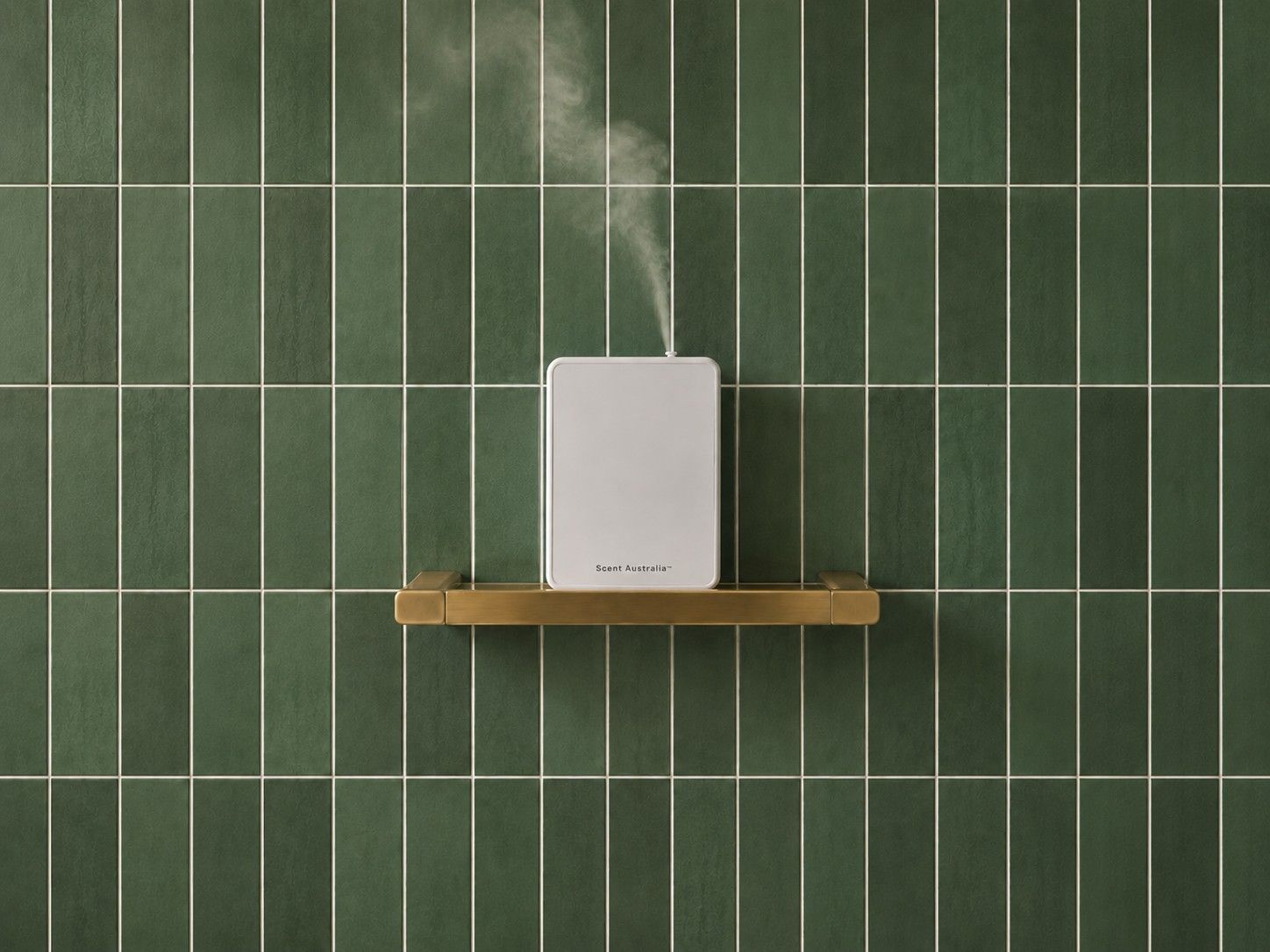
A commercial scenting unit installed within or near the target zone, wall mounted, free standing or rail mounted, that operates independently of the building's air-handling system.
Zone
A defined area of a site that is scented, or deliberately left unscented, as a unit. Zones are set by layout, airflow, use and the desired experience rather than by floor area alone.
Compliance terms
AICIS
The Australian Industrial Chemicals Introduction Scheme, which replaced NICNAS on 1 July 2020 and regulates the introduction of industrial chemicals in Australia, including fragrance chemicals used in relevant products.
IFRA
The International Fragrance Association, whose Standards restrict, prohibit or set criteria for certain fragrance ingredients. IFRA compliance is one part of a fragrance safety framework, not a blanket safety guarantee.
SDS
A safety data sheet. Where an SDS or equivalent documentation applies to a supplied fragrance or product, Scent Australia provides or directs customers to the current approved document.
Related guides



Start with the right conversation.
Build an indicative plan in a few minutes, or speak to a Scent Australia specialist about the site, the brand and the timing.